Project Overview
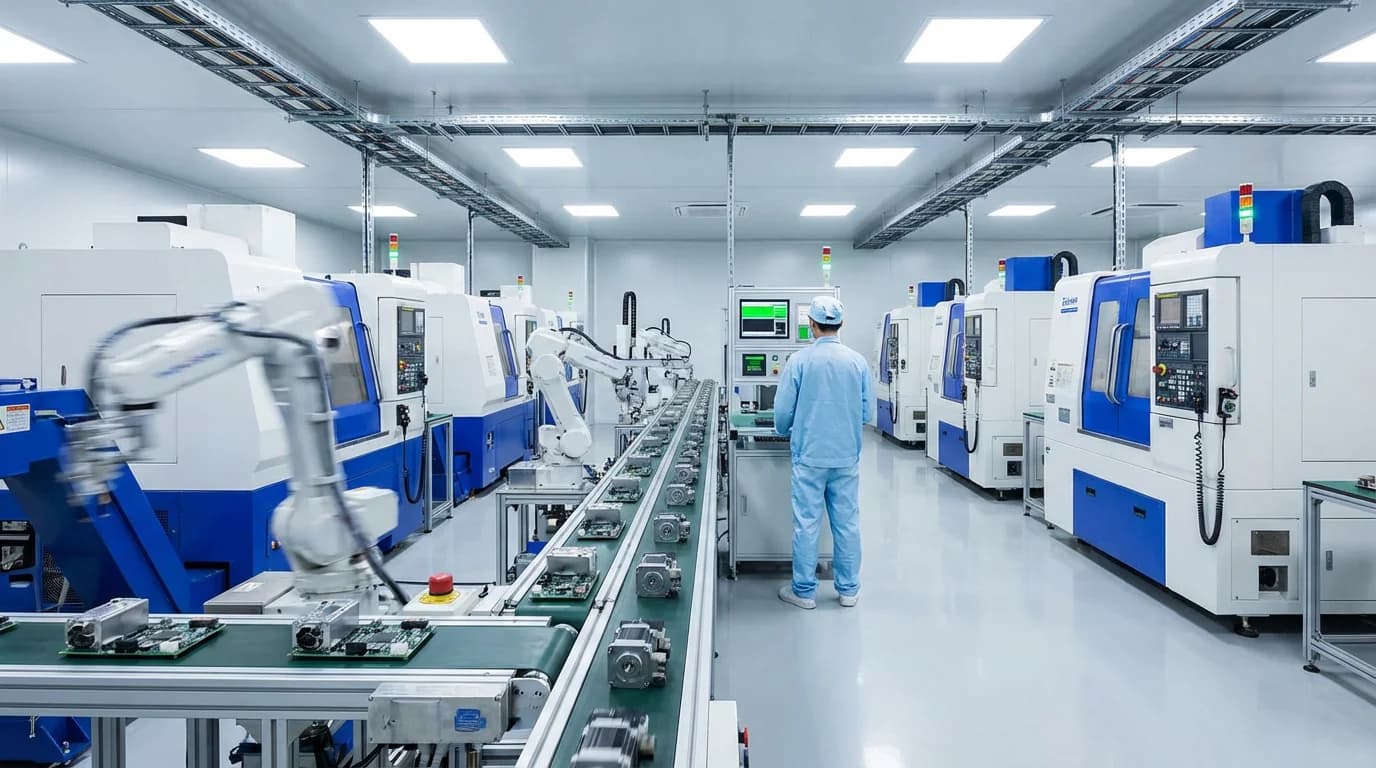
This case study documents our completed three-stage AI and machine learning implementation with a manufacturing facility in Vietnam. All three stages have been successfully deployed and are currently operational, addressing quality control, predictive maintenance, and production optimization challenges in their electromechanical manufacturing operations.
The client manufactures electromechanical components and assemblies at their Vietnam facility. The company needed to improve product quality consistency, reduce unplanned equipment downtime, and optimize production scheduling to meet customer demands while controlling costs.
Implementation Overview
We implemented three stages over the course of the engagement, each targeting a specific operational challenge. Unlike ongoing implementations, all three stages are now complete and running in production, delivering measurable improvements to the client's manufacturing operations.
| Stage | Focus Area | Status | Key Capabilities |
|---|---|---|---|
| 1 | Automated Quality Inspection | Completed | Computer vision defect detection, real-time product inspection, automated rejection, defect pattern analysis, quality traceability, supervisor alerts |
| 2 | Predictive Maintenance | Completed | Equipment health monitoring, sensor data analysis, failure prediction, prioritized work orders, maintenance scheduling, performance tracking |
| 3 | Production Scheduling | Completed | Automated schedule generation, multi-constraint optimization, real-time rescheduling, delivery date prediction, bottleneck identification, integrated operations management |
Automated Quality Inspection System
The first stage deployed a computer vision system that inspects products on the assembly line automatically. Previously, quality control relied on human inspectors examining products visually, which was time-consuming, inconsistent, and could not check every single unit at high production speeds. Manual inspection also meant that defects were often discovered late in the production process or even after shipping, resulting in rework costs and customer complaints.
We installed high-resolution cameras at key points along the assembly line where they capture images of components and finished products as they pass through production. Machine learning models analyze these images in real-time to detect defects including dimensional errors, surface imperfections, incorrect component placement, missing parts, and assembly mistakes. The system can inspect products much faster than human inspectors while maintaining consistent standards across all shifts and production lines.
We trained the detection models using thousands of images of both acceptable products and various defect types from the client's historical quality records. The models learned to distinguish between normal manufacturing variation that falls within tolerance and actual defects requiring rejection or rework. For electromechanical components where precise measurements matter, we integrated the vision system with measurements from other sensors to verify dimensions and tolerances.
When the system detects a defect, it automatically flags the product and can trigger rejection mechanisms to remove it from the line. It also logs detailed information about each defect including type, location, severity, and which production station it occurred at. This data helps identify patterns, such as a specific machine producing more defects during certain times or after running for extended periods. The system sends alerts to line supervisors when defect rates spike, allowing them to investigate and correct problems quickly before significant quantities of defective products are made.
The inspection system runs continuously during production hours and requires minimal human intervention. Quality control staff now focus on investigating root causes of defects and implementing corrective actions rather than spending their time examining individual products. The system maintains detailed records of every inspected product, providing complete traceability if quality issues arise later.
Predictive Maintenance System
The second stage implemented a predictive maintenance system that monitors manufacturing equipment and predicts when machines will need maintenance before they break down. Unplanned equipment failures were causing costly production interruptions and rush repair jobs. The previous maintenance approach relied on fixed schedules that sometimes serviced equipment before necessary or missed problems that developed between scheduled maintenance intervals.
We installed sensors on critical production equipment to monitor operating conditions continuously. These sensors track vibration patterns, temperature, power consumption, operating speed, pressure, and other parameters that indicate machine health. The sensor data streams to a central system where machine learning models analyze it for signs of developing problems.
The predictive models learned what normal operation looks like for each machine and can detect subtle changes that indicate wear, misalignment, or other issues developing. For example, a motor bearing that is starting to fail will produce slightly different vibration patterns before it completely breaks. Catching these early warning signs allows maintenance to be scheduled during planned downtime rather than having the machine fail during a production run.
The system ranks maintenance priorities based on failure probability, potential impact on production, and available maintenance resources. It generates work orders automatically when a machine needs attention, specifying what type of maintenance is likely needed based on the observed symptoms. This helps maintenance teams prepare the right parts and tools before starting the job.
We integrated the predictive maintenance system with the client's existing maintenance management software so that predicted maintenance tasks flow into their normal workflow. Maintenance staff access dashboards showing the health status of all monitored equipment, with color-coded alerts for machines requiring attention. The system tracks maintenance history and correlates it with equipment performance to identify which machines are most reliable and which require frequent intervention.
Since deployment, the system has identified several developing problems that would have resulted in unplanned failures if not addressed. Maintenance can now be scheduled during shift changes or weekends to minimize production impact. Parts can be ordered in advance rather than expedited after a breakdown. The data has also revealed which equipment is nearing end of useful life and should be budgeted for replacement.
Production Scheduling Optimization
The third stage deployed an AI system that optimizes production scheduling across the client's manufacturing operations. Production scheduling in manufacturing involves complex tradeoffs between competing objectives like minimizing setup time, meeting delivery deadlines, maximizing equipment utilization, balancing workload, and reducing work-in-progress inventory. Human schedulers can create workable schedules but typically cannot find the optimal solution when managing dozens of products across multiple production lines with different capabilities and constraints.
The optimization system takes all current orders including quantities, specifications, and delivery deadlines, then determines the best sequence to manufacture them. It considers how long each product takes to produce on different equipment, setup time required when switching between products, which machines can make which products, current equipment availability accounting for predicted maintenance from stage two, raw material inventory levels, and workforce scheduling constraints.
We built the optimization models using a combination of machine learning and operations research techniques. The machine learning components predict how long jobs will actually take based on historical production data, which is more accurate than theoretical cycle times because it accounts for real-world factors like minor delays, quality issues, and operator variability. The operations research algorithms then search through possible schedules to find solutions that meet all constraints while optimizing defined objectives.
The system generates schedules automatically and can re-optimize when conditions change, such as a rush order coming in, equipment breaking down, or a material shipment being delayed. Production managers review the recommended schedule and can make adjustments if needed, but in practice they usually accept the AI-generated schedule because it performs better than manual scheduling.
We implemented visualization tools that show the schedule as a Gantt chart where managers can see what each production line will be making at any given time. The system highlights potential bottlenecks where work might queue up, allowing proactive resource allocation. It also calculates estimated completion dates for all orders, which the sales team uses to give customers accurate delivery commitments.
The optimization system connects to the quality inspection system from stage one and the maintenance system from stage two, creating an integrated production management environment. For example, if the maintenance system indicates a machine will need service, the scheduler automatically routes work to other equipment and plans the maintenance during a low-impact window.
Results
The quality inspection system from stage one has reduced defect escape rates while inspecting 100% of production instead of the statistical sampling previously used. Early defect detection prevents wasted labor on products that will ultimately be rejected. The detailed defect data has helped identify and fix several recurring quality problems at their source.
The predictive maintenance system from stage two has cut unplanned downtime substantially. Maintenance is now scheduled proactively during planned windows rather than reactively after failures occur. This has reduced emergency repair costs and extended equipment life by catching problems before they cause secondary damage.
The production scheduling system from stage three has improved on-time delivery performance while reducing work-in-progress inventory. Production runs are sequenced more efficiently, reducing time spent on changeovers between products. The factory can handle more orders with the same equipment because scheduling is more efficient.
All three systems work together to create a more efficient and reliable manufacturing operation. Quality issues detected in stage one inform the scheduler in stage three to avoid problematic equipment or production conditions. Maintenance predictions from stage two feed into production scheduling to minimize disruption. The integrated approach delivers benefits beyond what each individual system would provide in isolation.
- Artificial Intelligence
- Machine Learning
- Computer Vision
- Manufacturing
- Quality Control
- Predictive Maintenance
- Production Optimization
- Operations Research