Project Overview
This case study documents our ongoing AI and machine learning implementation with a healthy grocery retail chain operating across the United States. We are following a five-stage plan that introduces AI capabilities gradually, starting with basic infrastructure and moving toward more complex systems. We have completed the first two stages and are currently working on stage three.
Our client is a grocery retailer specializing in fresh, natural, and organic products. The company wanted to use AI and machine learning to improve their operations, manage inventory better, and serve customers more effectively.
Implementation Approach
We are implementing AI in five stages. Each stage builds on the previous one, which reduces disruption to daily operations and allows us to fix problems before moving forward.
| Stage | Focus Area | Status | Key Capabilities |
|---|---|---|---|
| 1 | Data Infrastructure | Completed | Data warehouse, automated pipelines, real-time processing, security controls, quality checks |
| 2 | Demand Forecasting | Completed | Sales predictions by product and store, machine learning models, weather and event integration, automatic updates, manager dashboards |
| 3 | Computer Vision | In Progress | Shelf monitoring, stock counting, out-of-stock alerts, layout compliance checks, produce quality assessment, inventory verification |
| 4 | Customer Engagement | Planned | Product recommendations, targeted promotions, purchase pattern analysis, mobile app features |
| 5 | Supply Chain AI | Planned | Supplier selection, order timing, delivery routing, warehouse management, cost optimization |
Data Infrastructure Development
The first stage created a system to collect and organize data from across the company. We built a data warehouse that pulls information from cash registers, inventory systems, supplier databases, and customer interactions. The system checks data quality automatically, catching errors and inconsistencies as they happen.
We set up pipelines that clean and standardize data from different sources so everything works together properly. The infrastructure processes data in real-time, meaning managers can see what is happening in stores right now rather than waiting for daily or weekly reports. We also put security measures in place to protect customer information and meet privacy regulations.
Demand Forecasting System
The second stage built a machine learning system that predicts how much of each product stores will sell. The system looks at past sales for every product in every store, then factors in things like the day of the week, season, holidays, weather, and promotional events.
We used several different machine learning algorithms together because some are better at spotting certain patterns than others. The forecasts work at different levels so individual stores know what to order while regional managers can plan for larger trends. The models retrain themselves regularly as new sales data comes in, which keeps predictions accurate as customer behavior changes.
Store managers get straightforward dashboards showing predicted sales and suggested order amounts. This helps them keep enough product on shelves without ordering too much and creating waste.
Computer Vision for Inventory Management
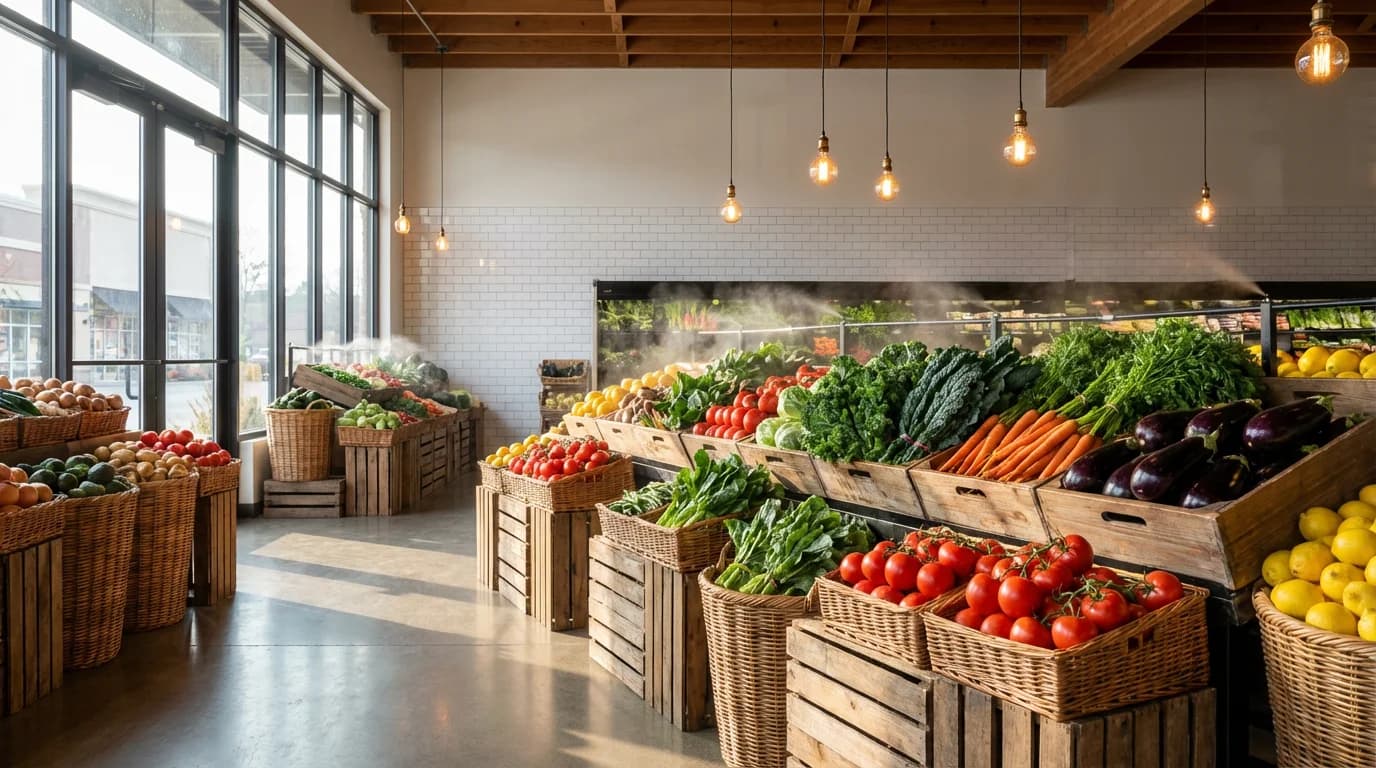
We are currently installing a computer vision system that uses cameras to monitor store shelves and track inventory automatically. Cameras positioned throughout stores take pictures of products at regular intervals. Machine learning models analyze these images to identify products, count how many are on the shelf, spot empty spaces, and notice when products are in the wrong location.
The system can tell different products apart even when they look similar, and it can read labels and assess produce quality by looking at color and visible condition. We trained separate models for different product types because produce requires different analysis than packaged goods.
When stock gets low, the system sends alerts so staff can restock before customers find empty shelves. It also flags when products are not arranged according to the store layout plan. The computer vision system connects to the existing inventory database and compares what it sees on shelves to what the computer says should be there. When these numbers do not match, it highlights the discrepancy so staff can investigate potential theft, mistakes, or system errors.
What Comes Next
Personalized customer engagement comes next: recommendation systems that suggest products based on what individual customers buy regularly and what similar shoppers purchase. This will work through the mobile app and email marketing.
Supply chain optimization follows, using AI to manage the entire chain from choosing suppliers and timing orders to planning delivery routes and managing warehouse operations. The goal is to reduce costs while keeping products fresh and available.
Results
The demand forecasting system has improved inventory accuracy. Stores run out of products less often while also carrying less excess inventory that spoils or expires. Store managers report that they trust the forecasting recommendations because they account for more factors than anyone could track manually.
The data infrastructure lets managers answer business questions quickly instead of waiting days for reports. The computer vision system is showing early positive results in stage three. Automated shelf monitoring saves staff time previously spent manually checking stock levels, which they can now spend helping customers.
- Artificial Intelligence
- Machine Learning
- Computer Vision
- Retail
- Data Infrastructure
- Demand Forecasting
- Real-time Analytics
- Supply Chain